Storylane is built for selling. It calls itself demo automation software, and the label fits: you capture your product into a guided demo with chapters, AI voiceover, and translation, then the sales layer takes over. Account Reveal shows which companies looked at a demo, HubSpot gets the signal, Presenter mode handles live calls, and Hubs bundle demos into a deal room for a buying committee. It even shipped an MCP server in August, so you can build and publish demos from Claude or ChatGPT. By its own count, more than 200,000 demos have been built on it. If you run demos as a revenue motion, Storylane is a serious tool.
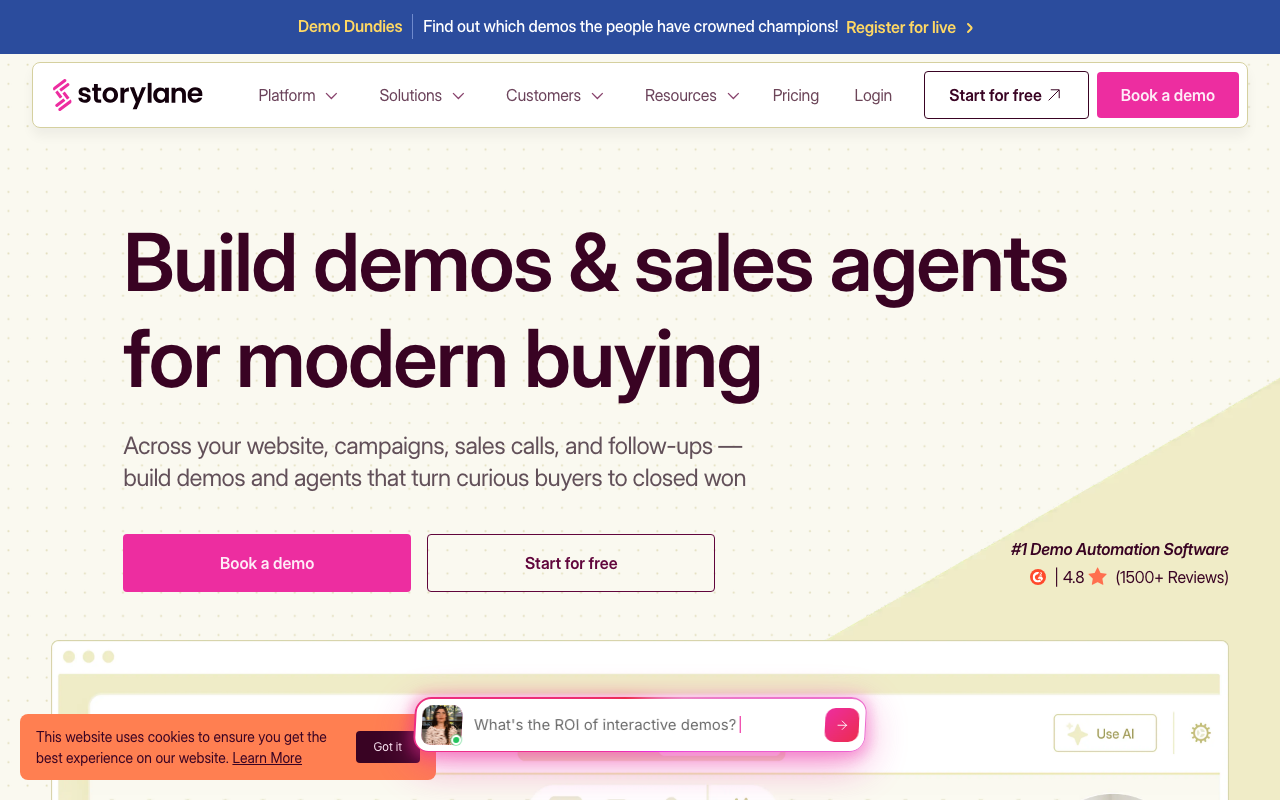
The catch is the ladder. Starter is $50 a month for one seat, plus $40 for every extra person. The features most demo teams actually shop for (the HTML editor, personalization tokens, A/B testing) sit on Growth at $625 a month for five seats, and SSO, a whitelabel demo URL, and the Salesforce app wait for Premium at $1,500 a month. There's also no hosted help center, since Hubs are deal rooms rather than a searchable knowledge base, and Storylane's own docs say a downloaded demo loses its interactivity. If you aren't running a sales floor, or you need the same content to work for onboarding and support, it's worth looking around.
How we picked
Every tool here does Storylane's core job: capture your product as a clickable demo a buyer can explore on their own, and show you how people engaged with it. We only included tools whose prices you can check on their own site (we did, in October 2026), which is why Consensus, a capable enterprise option that stopped publishing prices this year, isn't on the list. We also left out AI sales-agent products, Storylane's own RepX included, because an AI SDR answering visitors is a different purchase from a demo builder. We make Guidejar, so it's first, and we've tried to be specific about where each of the others beats it.
Guidejar: the best all-round value
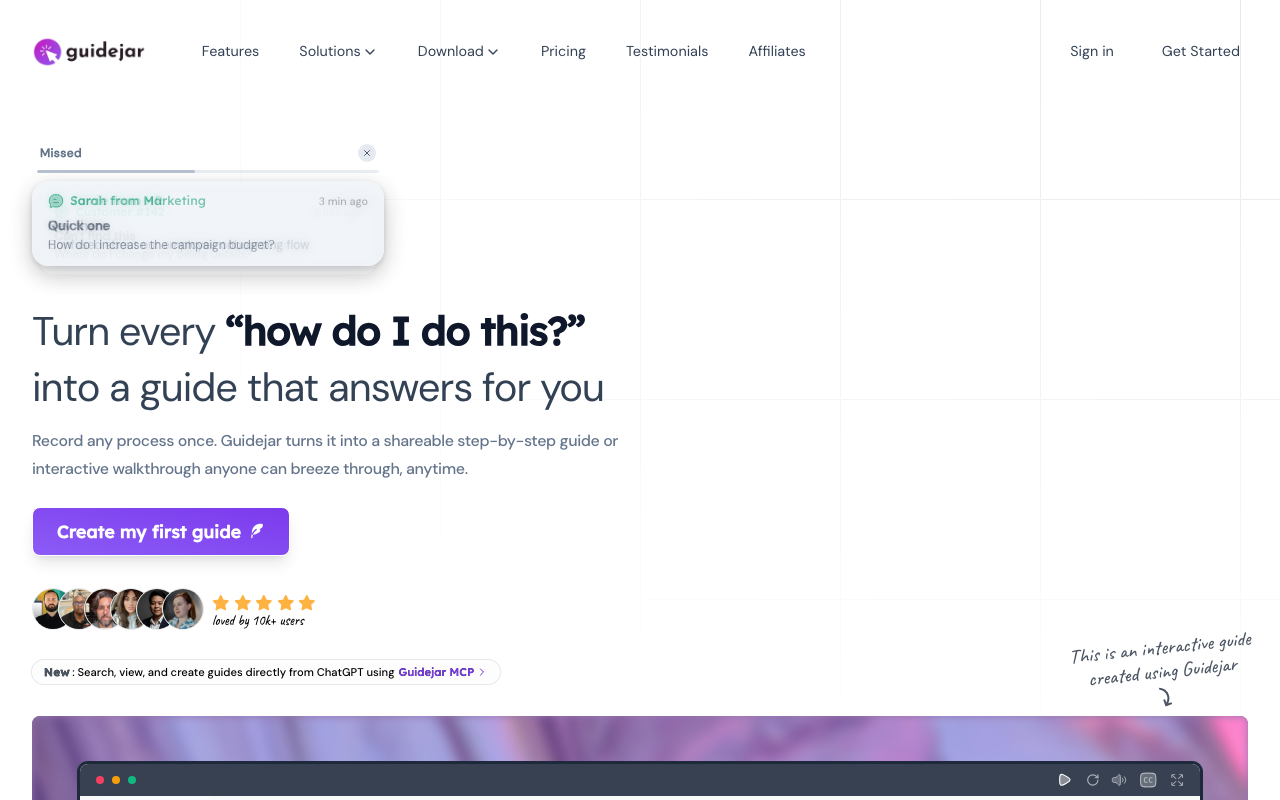
Guidejar is the pick when Storylane is more sales machinery than you need. You capture a product flow once and publish it as an interactive walkthrough with chapters, branching, personalization variables, AI voiceover, and translation into 30-plus languages, all on the $19 Pro plan. Storylane puts personalization tokens on its $625 tier. The same capture also renders as a written step-by-step guide, and from the $25 Plus plan your whole library lives in a branded help center on your own domain, which is the piece Storylane doesn't have.
The team math is where it gets stark. Five people on Storylane Starter cost $210 a month billed monthly. The same five on Guidejar Business cost $75 flat, and that plan includes the help center, MP4 export, Ask AI, and voice cloning.
Best for: teams that want interactive walkthroughs that also serve onboarding and support, without a sales-tool price ladder.
Fair warning, since we're being honest: Guidejar doesn't do HTML demos at any tier, and it has no visitor de-anonymization, A/B testing, or deal rooms. If your demos exist to feed a pipeline, Storylane does things we don't. Storylane also gives view-only teammates free seats, while every Guidejar workspace member needs a seat (people reading your published walkthroughs and help center don't). And the free plan stops at 5 guides, enough to evaluate, not to run a library on.
See the full Guidejar vs Storylane comparison
Supademo: best for HTML demos on a smaller budget
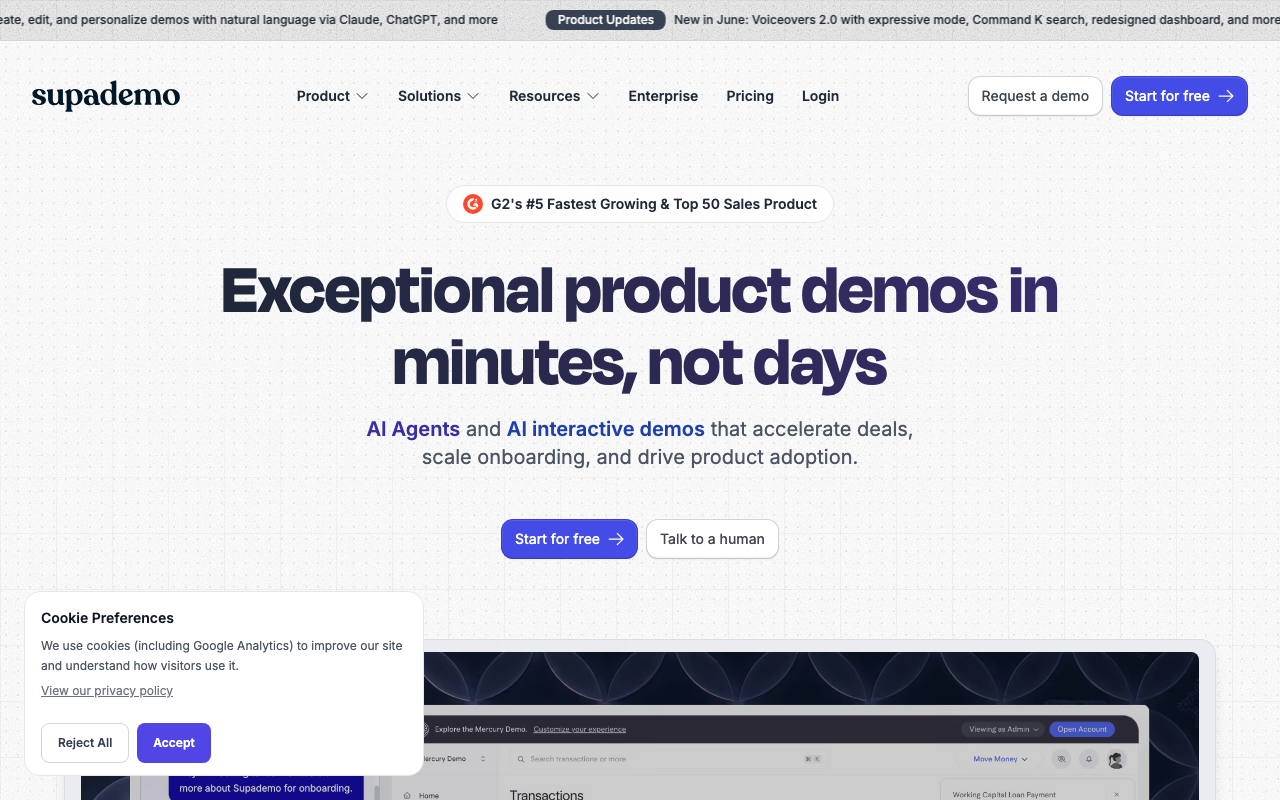
If the thing pulling you toward Storylane's Growth tier is HTML demos, start here. Supademo's Business plan clones your app's front end so the demo is pixel-perfect, and you can edit the text and data inside it after capture. It costs $199 a month billed annually ($249 monthly) with one creator included. On Storylane, HTML demos mean Growth, at $500 a month billed annually.
Below that, Supademo's Scale plan runs $38 to $50 per creator and already includes native HubSpot, Salesforce, and Marketo connectors, while Storylane holds its Salesforce integration back for the $1,500 Premium tier. View-only collaborators are free too.
Best for: teams that want HTML demos without paying for Storylane's Growth tier.
Sandbox demos, AI voice cloning, and Route Hub still wait for Growth ($350 a month billed annually for five creators). And data export is Enterprise-only, so think about lock-in before you build a big library.
See the full Supademo vs Storylane comparison
Arcade: best for polished marketing demos
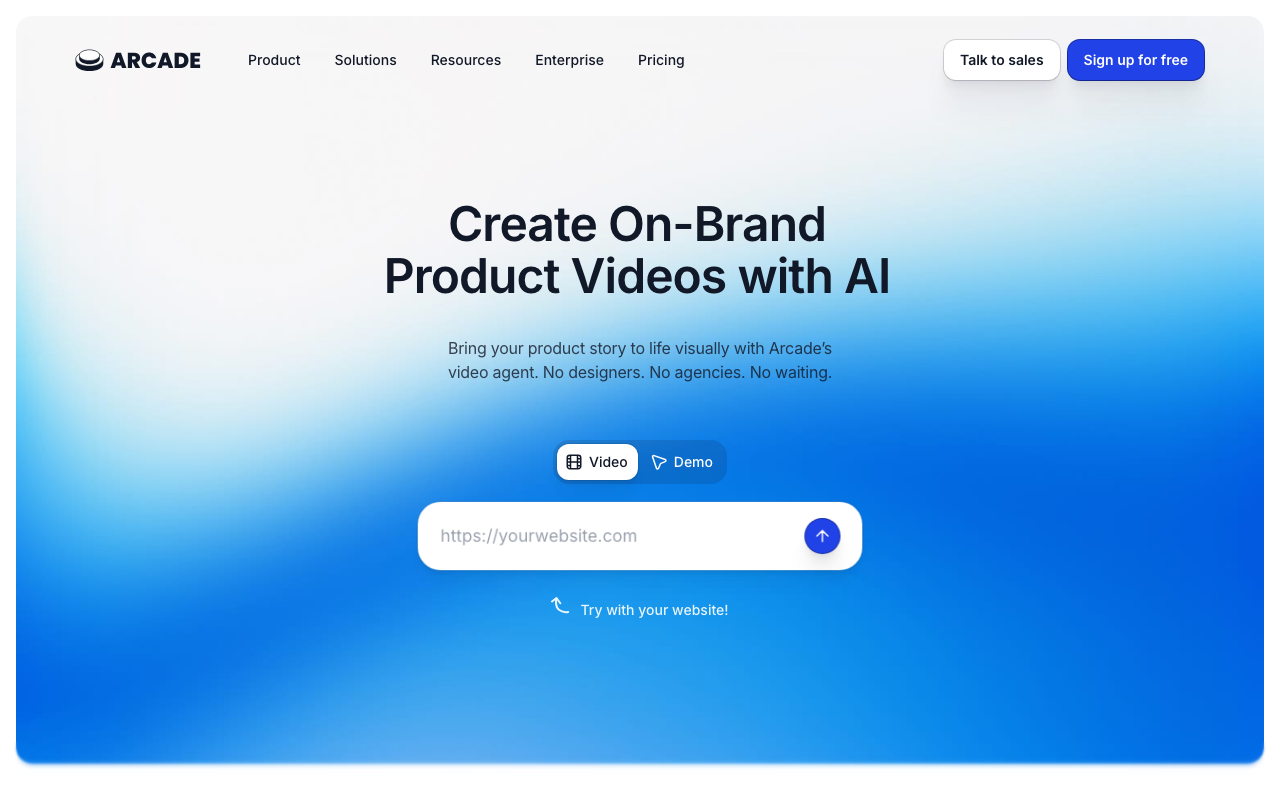
Arcade makes some of the best-looking demos and AI videos in the category, the kind that go on a landing-page hero. Two features have no real equivalent elsewhere. Page Morph lets you edit any text on your live app before you record, so test data, customer names, and copy that hasn't shipped yet all look right. If cleaning up the data on screen is why you were eyeing Storylane's HTML editor, Page Morph covers a lot of that on the $50-a-seat Growth plan. And the Figma plugin, available even on the free plan, lets you build a demo before the product exists.
Growth is $50 a seat billed monthly or $42.50 billed annually, with Audience Reveal showing which companies watched.
Best for: marketing teams that care how the demo looks, or need one before the product ships.
True HTML capture, a custom domain, and SSO are all Enterprise-only, and Growth is capped at 10 seats. AI video is also moving to a separate paid subscription later in October, at a price Arcade hasn't published yet.
See the full Arcade vs Storylane comparison
Navattic: best for HTML-first demos
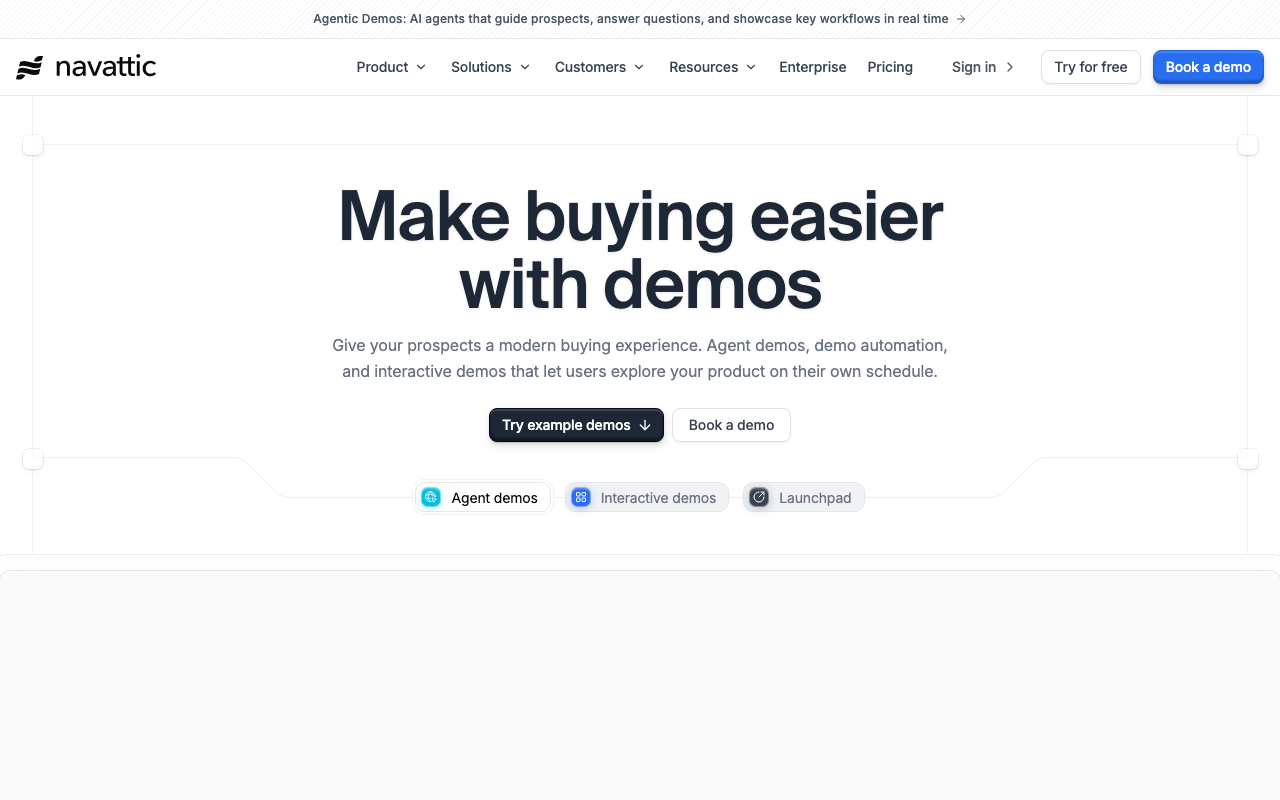
Navattic is built around HTML. Its web captures clone the real app, scroll and hover states included, and you edit them element by element. Even the free Starter demo can be an HTML capture, so you can see whether HTML demos are worth it before paying anyone. That's not possible on Storylane, where HTML sits on Growth.
Base is $500 a month billed annually ($600 monthly) for five seats, with unlimited HTML demos, forms, A/B testing, and native HubSpot, Salesforce, and Marketo integrations. Navattic is also pushing into AI agents that walk prospects through your product live.
Best for: teams where HTML capture is the whole point, and who want to try one free first.
The free tier is one demo on the default theme, and the next step is $500 a month. Seats come bundled at roughly $100 a head, and translation waits for Growth at $1,000 a month billed annually.
See the full Storylane vs Navattic comparison
Walnut: best for enterprise sales teams
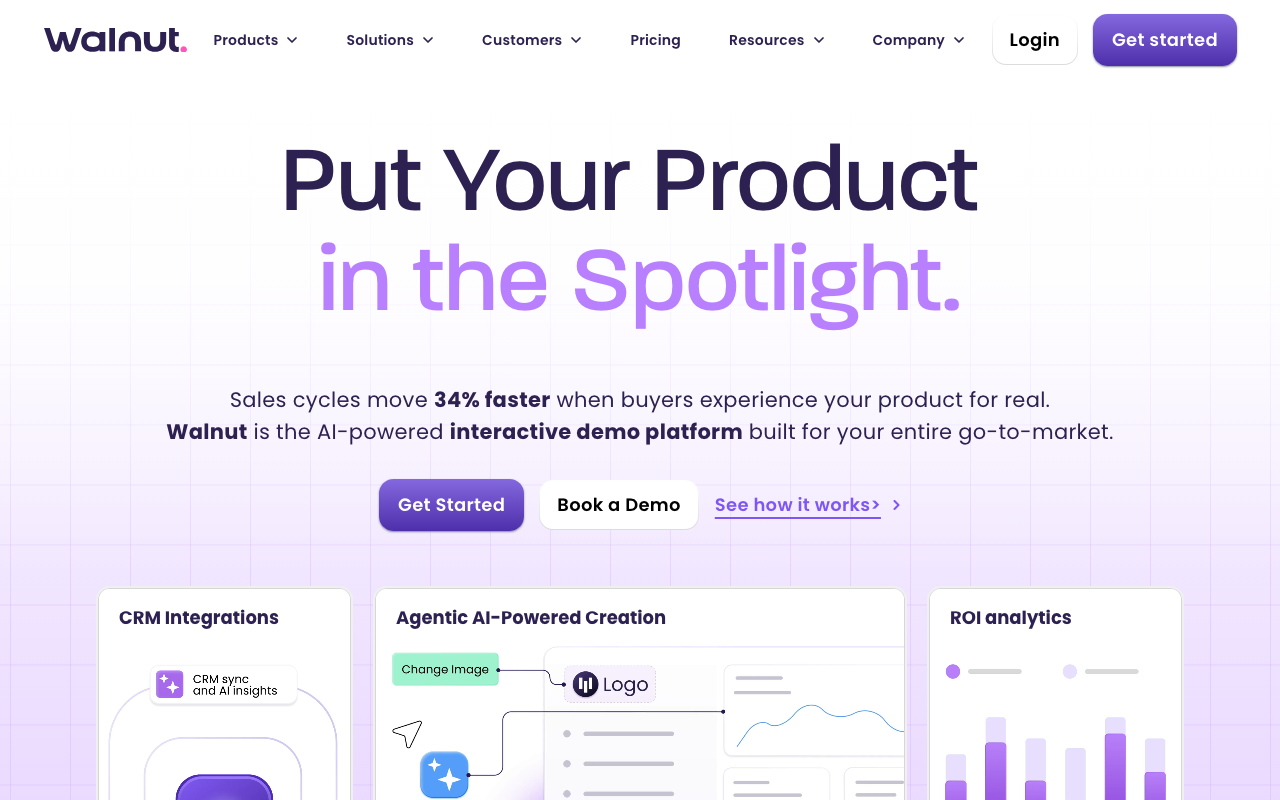
Walnut is where you go when Storylane Premium is the conversation you're already having. Its Salesforce app launches demos, scores engagement, and flags deal risk from inside the CRM. Walnut Uncover de-anonymizes demo viewers through ZoomInfo, 6sense, Demandbase, and Clearbit, and Digital Sales Rooms give each deal a shared space. It's used by Adobe, Cisco, and NetApp, and built for standardizing demos across a big global sales org.
Ignite is $575 a month billed annually ($6,900 a year) for three editor and three presenter seats. Accelerate, where Uncover, sandbox demos, the advanced Salesforce app, and SSO with SCIM live, is $1,550 a month billed annually.
Best for: enterprise sales orgs that need CRM attribution and governance across a lot of reps.
There's no free plan and no trial, contracts are annual, and many features are paid add-ons on the lower tiers, so the headline price understates the real one. For a small team shipping its first demo, it's overkill.
See the full Walnut vs Storylane comparison
How to choose
If you want walkthroughs that work for sales, onboarding, and support at a fraction of the price, Guidejar is the value pick. If HTML demos are what you need and Growth is what Storylane quoted you, look at Supademo first. Want demos that look designed, or need one before the product ships? Arcade. Building everything around HTML capture? Navattic. Running an enterprise sales floor that lives in Salesforce? Walnut.
For most teams leaving Storylane over price, Guidejar is the natural first stop. You can compare them head to head here.
Frequently asked questions
What's the best Storylane alternative?
It depends on why you're leaving. Guidejar is the best all-round value if you want interactive walkthroughs plus written guides and a help center at a self-serve price. Supademo is the cheapest way to get HTML demos. Arcade is best for polished marketing demos and AI video. Navattic is best when HTML capture is the whole point. Walnut is best for enterprise sales teams that need deep CRM attribution.
Is there a free Storylane alternative?
Yes. Guidejar, Supademo, Arcade, and Navattic all have free plans. They're all capped, though: Guidejar allows 5 guides, Supademo 5 demos, and Arcade and Navattic one published demo each. That's enough to evaluate a tool, not to run a real library. Walnut has no free plan or trial at all. Storylane's own free plan allows one published demo at a time.
Which Storylane alternative is cheapest?
Guidejar, at $19 a seat billed monthly ($16 billed yearly), and a five-person team pays $75 a month on Business. The same five people on Storylane Starter pay $210 a month. Supademo runs $38 to $50 per creator and Arcade $42.50 to $50 a seat. Navattic ($500 a month billed annually) and Walnut ($575 a month billed annually) are the expensive end and are aimed at bigger teams.
Is there a cheaper alternative to Storylane for HTML demos?
Yes, Supademo. Its Business plan adds HTML demos for $199 a month billed annually ($249 monthly) with one creator included. On Storylane, HTML demos need the Growth tier at $500 a month billed annually ($625 monthly). Navattic includes unlimited HTML demos on its $500-a-month Base plan, and its free demo can be an HTML capture. Arcade keeps true HTML capture on Enterprise, and Guidejar doesn't do HTML demos at all.
Why look for a Storylane alternative?
Mostly the price ladder. Storylane Starter is $50 a month for one seat plus $40 for each extra, the HTML editor, personalization tokens, and A/B testing need Growth at $625 a month, and SSO waits for Premium at $1,500. Storylane also has no hosted help center, and its own docs say downloaded demos lose their interactivity. Teams that aren't running a sales floor, or that need demos to double as onboarding and support content, often find a better fit elsewhere.
Prices and features checked against each vendor's public pages in October 2026. Spot something out of date? Tell us and we'll fix it.